
Woven Wire Mesh · Custom Manufacturing
Stainless Steel Woven Wire Mesh Manufacturer & Supplier
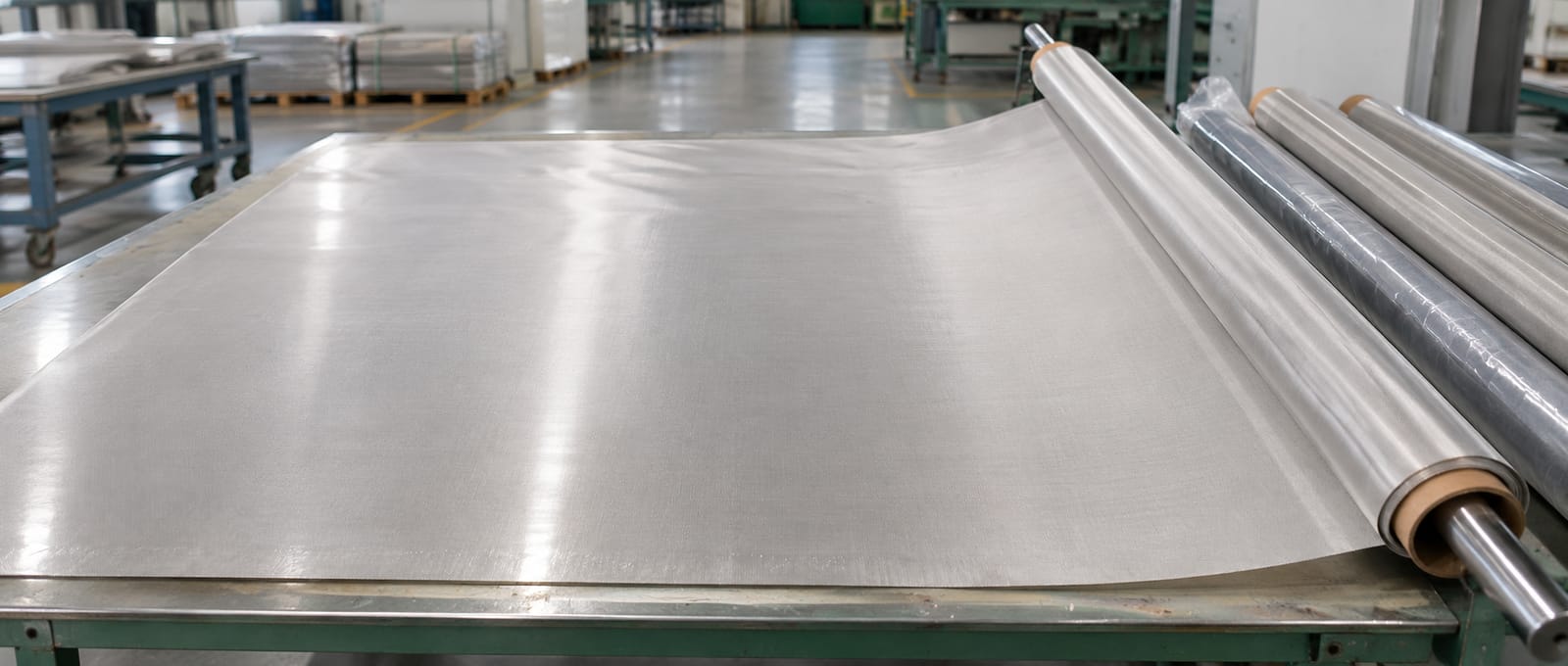
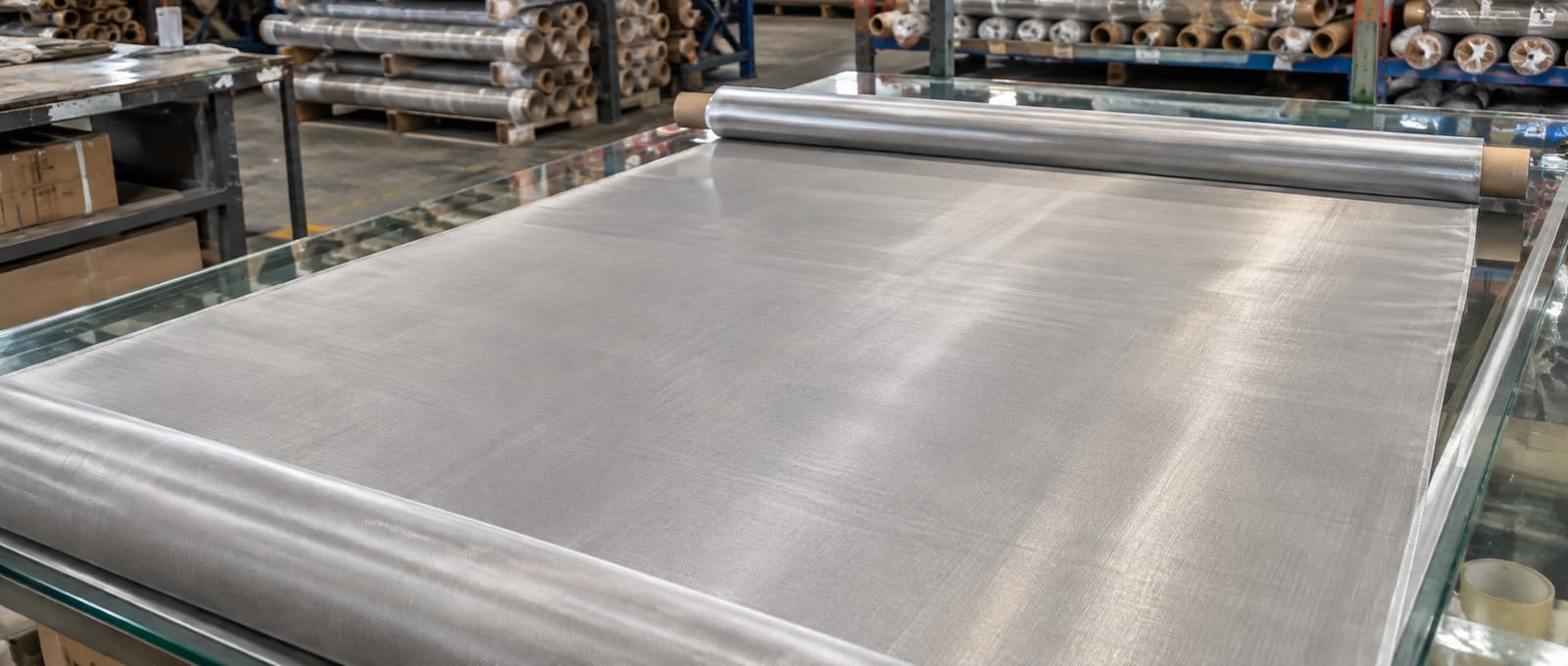
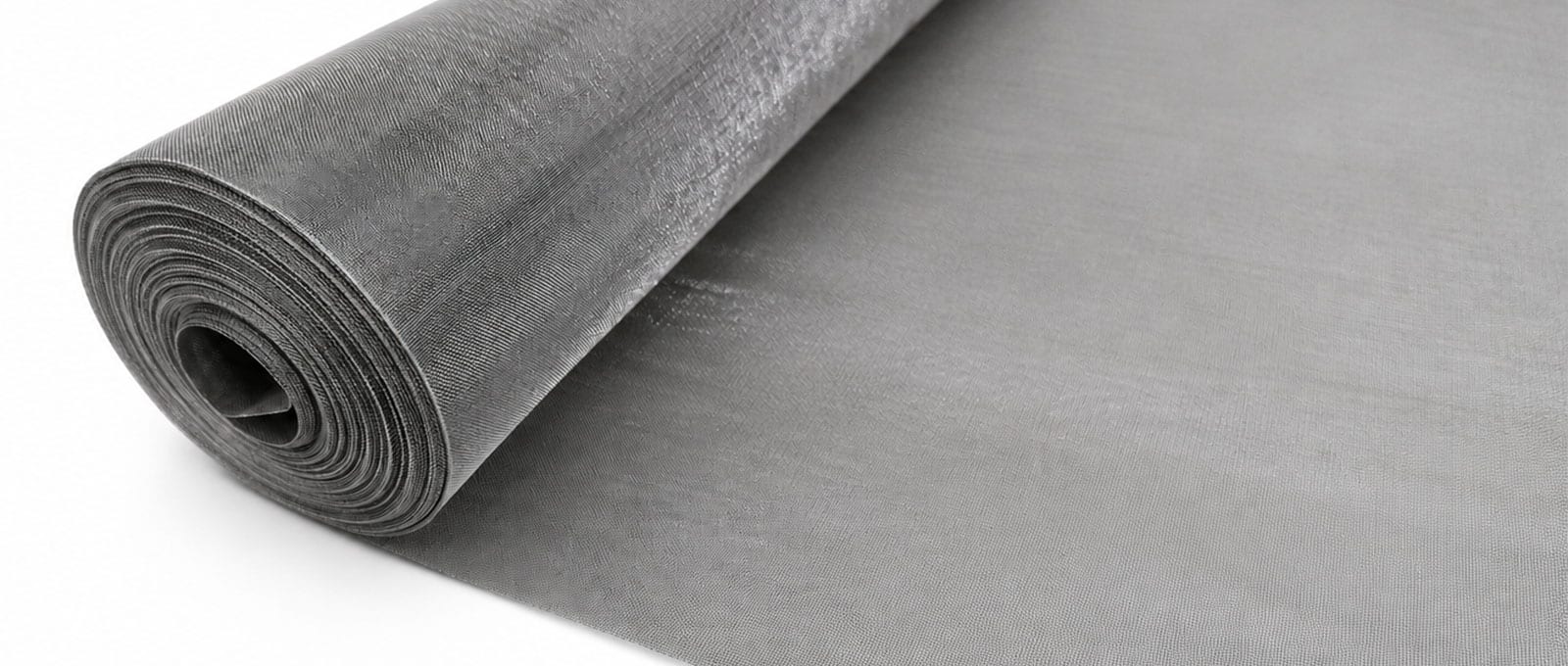
YueChu supplies stainless steel woven wire mesh in SS304, SS304L, SS316, SS316L and SS310S for industrial filtration, screening and OEM fabrication. Specify the weave, mesh count or aperture, wire diameter, dimensions and quantity for a made-to-order quotation.
- Plain, Twill & Dutch WeavesChoose a square-opening or filtration-oriented construction for the operating requirement.
- Specification-Led SupplyMesh count, wire diameter, aperture, width and length are reviewed together before quotation.
- Rolls, Sheets & Fabricated PartsSupply can be evaluated for full rolls, slit rolls, cut pieces and drawing-based components.
- B2B Export SupportPacking, inspection scope and delivery requirements are confirmed for the destination and order format.
Fast technical selection
Stainless Steel Woven Wire Mesh Specifications
Use these common square-woven references as a starting point for a project specification. The table is not a stock list. Material, weave, wire diameter, aperture, dimensions and tolerances are confirmed for each inquiry.
| Mesh count | Wire dia. | Opening | Typical construction | |
|---|---|---|---|---|
| 4 × 4 Mesh | 1.194 mm | 5.156 mm | Plain weave / crimped | |
| 6 × 6 Mesh | 0.889 mm | 3.344 mm | Plain weave / crimped | |
| 8 × 8 Mesh | 0.711 mm | 2.464 mm | Plain weave | |
| 10 × 10 Mesh | 0.635 mm | 1.905 mm | Plain weave | |
| 20 × 20 Mesh | 0.406 mm | 0.864 mm | Plain weave | |
| 30 × 30 Mesh | 0.305 mm | 0.542 mm | Plain weave | |
| 40 × 40 Mesh | 0.254 mm | 0.381 mm | Plain weave | |
| 50 × 50 Mesh | 0.229 mm | 0.279 mm | Plain weave | |
| 60 × 60 Mesh | 0.191 mm | 0.232 mm | Plain weave | |
| 80 × 80 Mesh | 0.140 mm | 0.178 mm | Plain weave | |
| 100 × 100 Mesh | 0.114 mm | 0.140 mm | Plain weave | |
| 120 × 120 Mesh | 0.094 mm | 0.118 mm | Plain weave | |
| 150 × 150 Mesh | 0.066 mm | 0.103 mm | Plain weave | |
| 200 × 200 Mesh | 0.053 mm | 0.074 mm | Plain weave |
Nominal opening: calculated for square mesh as 25.4 ÷ mesh count − wire diameter. Actual dimensions and tolerances must be confirmed for each order.
Dutch weave uses different warp and weft constructions and is quoted separately.
Specify Mesh Count by Weave Construction
For equal-count square mesh, the two directions have matching counts, such as 20 × 20 mesh. Dutch and reverse Dutch filter cloth need separate warp and weft counts and wire diameters. A single mesh number does not define their construction or filtration rating.
- Square-weave references
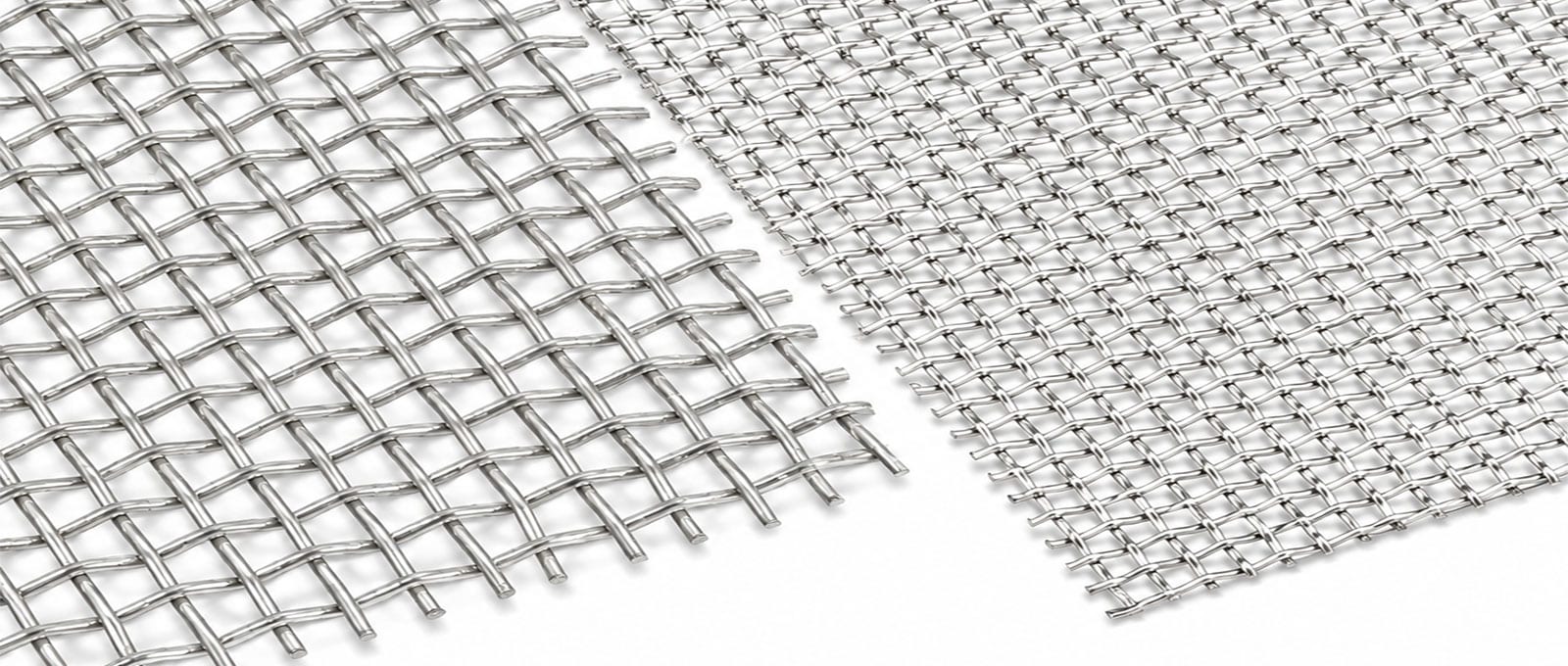
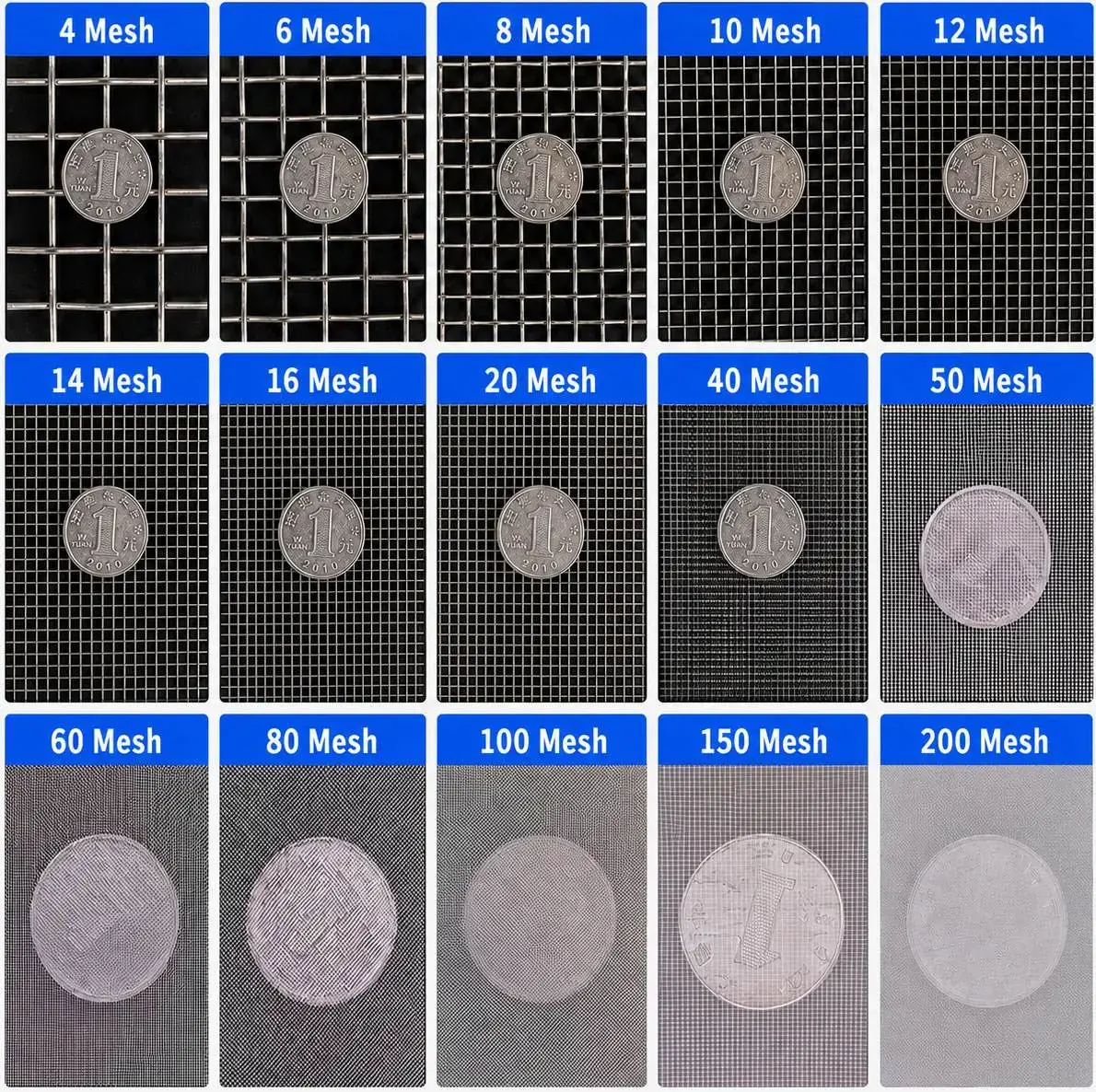
- Selected 4 × 4 to 200 × 200 mesh references; specify warp and weft counts per inch and wire diameters. Custom combinations require confirmation. Compare square-weave sizes and photos →
- Dutch weave specification
- Specify warp × weft counts per inch and each wire diameter, such as the published 20 × 150 plain Dutch or 20 × 250 twill Dutch references. Filtration ratings require product-specific test data; availability is confirmed separately. Review Dutch weave reference combinations →
- Reverse Dutch weave specification
- Specify warp × weft counts per inch and each wire diameter, such as the published 66 × 18 reverse plain Dutch reference. Confirm the complete construction, filtration test requirements and roll or belt dimensions for an order. Review reverse Dutch weave reference combinations →
Square-weave reference
Stainless Steel Woven Wire Mesh Size Chart
The image shows selected 4 to 200 mesh references. For wire diameters, labeled openings and calculated apertures, compare the wire mesh size chart. Confirm the complete weave and dimensions for the application; references are not production limits.
Product range
How to Specify Stainless Steel Woven Wire Mesh
A technically comparable RFQ defines material, weave, mesh dimensions and supply requirements together.Select the Material
Choose SS304 for general industrial service, evaluate SS316 for more demanding corrosion exposure, or review SS310S when elevated-temperature service affects material selection.
Select the Weave
Plain weave suits many square-opening uses. Twill and Dutch constructions are considered when fine filtration, wire support or flow characteristics change the requirement.
Define the Opening
Provide mesh count and wire diameter, or a target aperture or micron requirement. These values should be reviewed together rather than selected independently.
Confirm the Supply Form
Quote requests can specify roll width and length, cut-sheet dimensions, edge condition, quantity, packing, destination and inspection requirements.
Technical foundation
What Is Stainless Steel Woven Wire Mesh?
Stainless steel woven wire mesh is made by interlacing warp and weft wires into a controlled mesh structure. It is commonly called stainless wire cloth in North American industrial purchasing. The weave, wire diameter and opening work together to determine the mesh profile, strength and suitability for filtration or screening.
Plain weave is a common choice for square openings. Twill weave can accommodate relatively heavier wires at finer mesh counts, while Dutch and reverse Dutch constructions use different warp and weft arrangements for filtration duties. A target micron value alone is not enough to define a mesh; the full application and mesh construction should be reviewed.
For a quotation, provide the material grade, weave type, mesh count or target opening, wire diameter, finished dimensions, quantity and destination. This helps establish a technically comparable supply option before production is confirmed.
Material selection
Stainless Steel Grade Options
SS304
A widely used grade balancing corrosion resistance, formability and procurement cost for general industrial service.
Explore SS304 →SS304L
A low-carbon 304 variant often selected when welding or post-fabrication corrosion performance is important.
Explore SS304L →SS316
Contains molybdenum for improved resistance to chlorides and many chemical processing environments.
Explore SS316 →SS316L
Low-carbon 316 grade suited to welded filter components and demanding corrosion-resistant assemblies.
Explore SS316L →SS310S
A high-chromium, high-nickel grade considered for elevated-temperature service; confirm the applicable specification and required material documentation for the order.
Weave selection
Stainless Steel Woven Wire Mesh Weave Types
Plain Weave
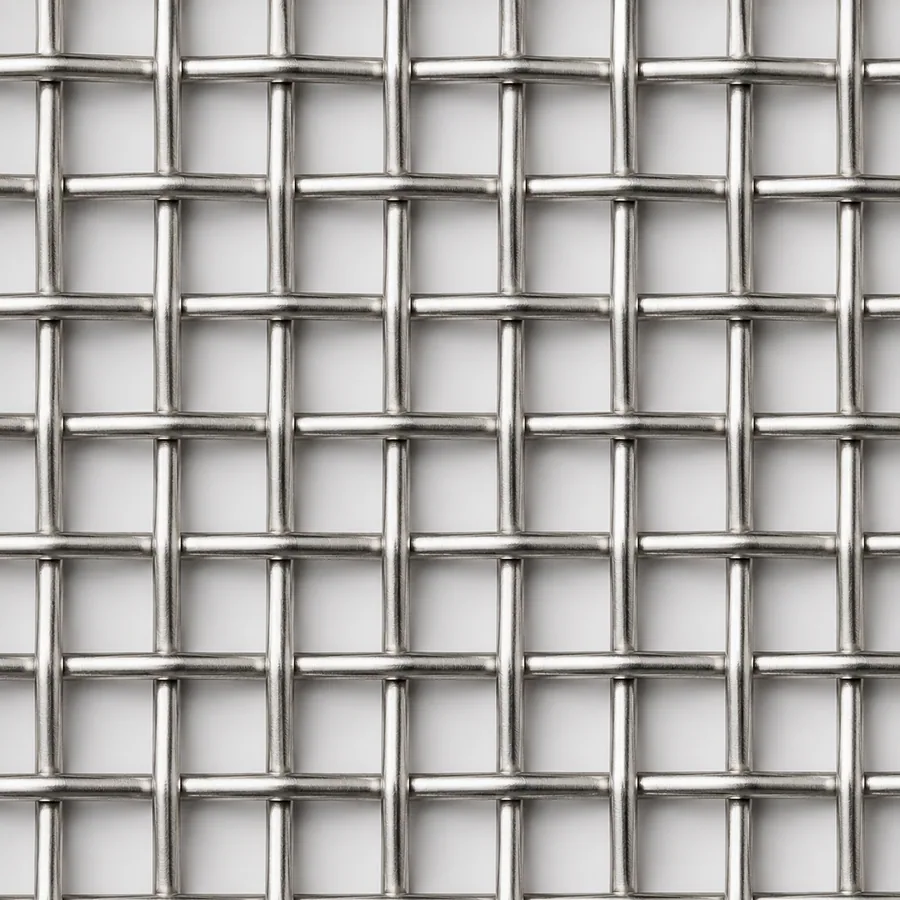
Each wire passes alternately over and under the next wire, producing stable square openings for broad industrial use.
Explore Plain Weave →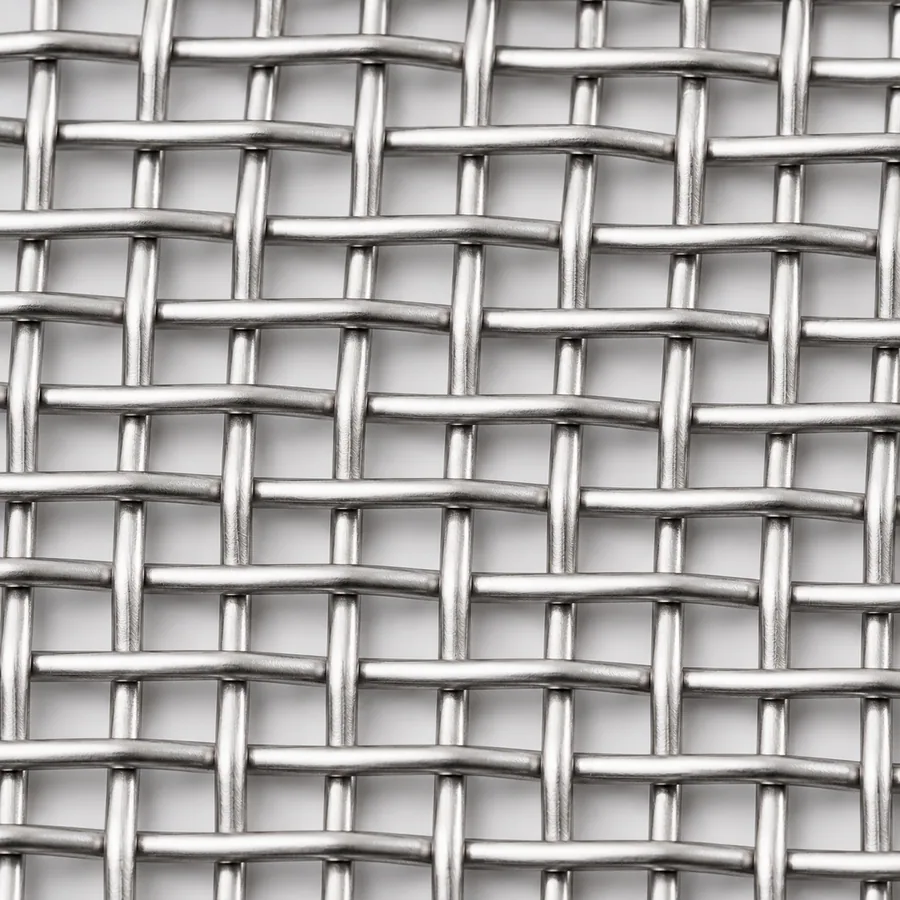
Twill Weave
Wires pass over and under two adjacent wires, allowing comparatively heavier wire at finer mesh counts.
Explore Twill Weave →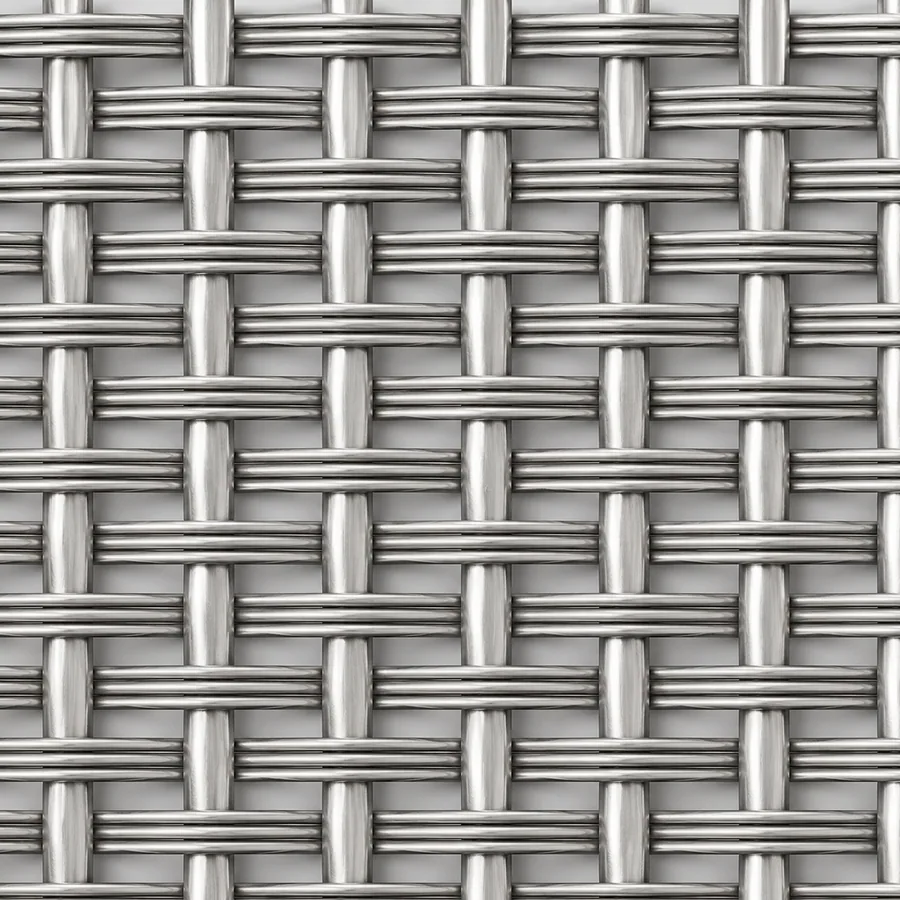
Dutch Weave
Different warp and weft wire arrangements create a dense filtration structure with high mechanical stability.
Explore Dutch Weave →
Reverse Dutch Weave
A reversed wire arrangement combines high flow capacity with fine particle retention for continuous filtration.
Explore Reverse Dutch Weave →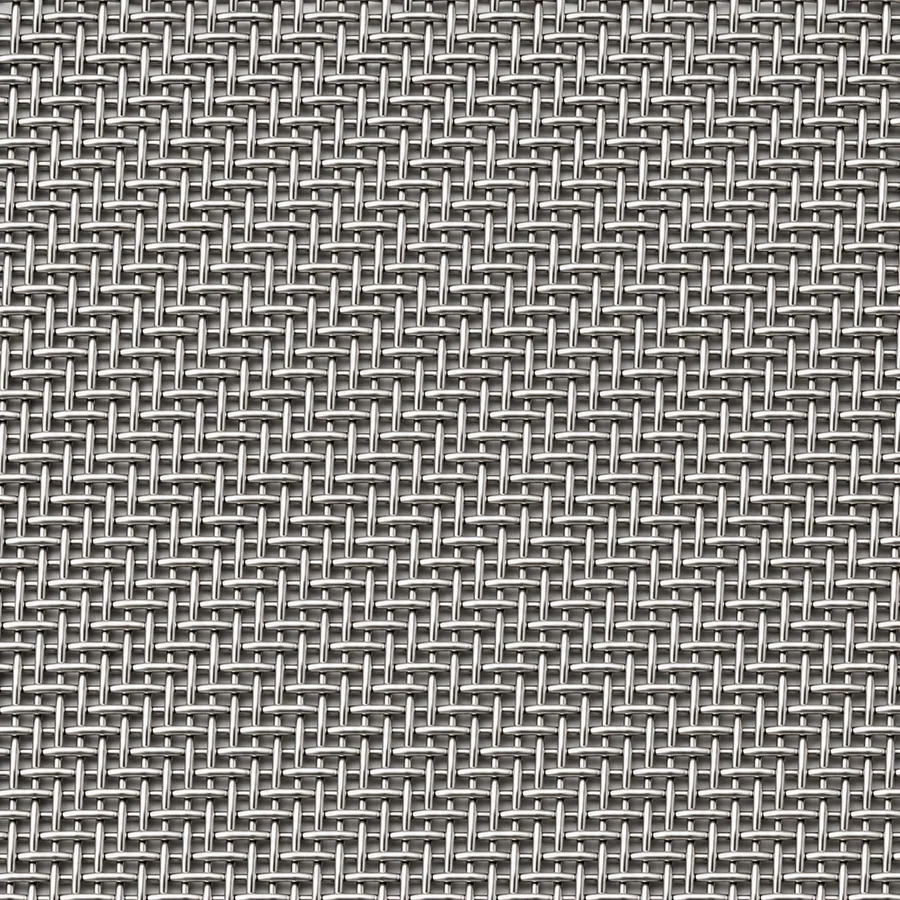
Twilled Dutch Weave
A tightly packed twill structure provides very fine particle retention with a smooth, mechanically stable surface.
Explore Twilled Dutch Weave →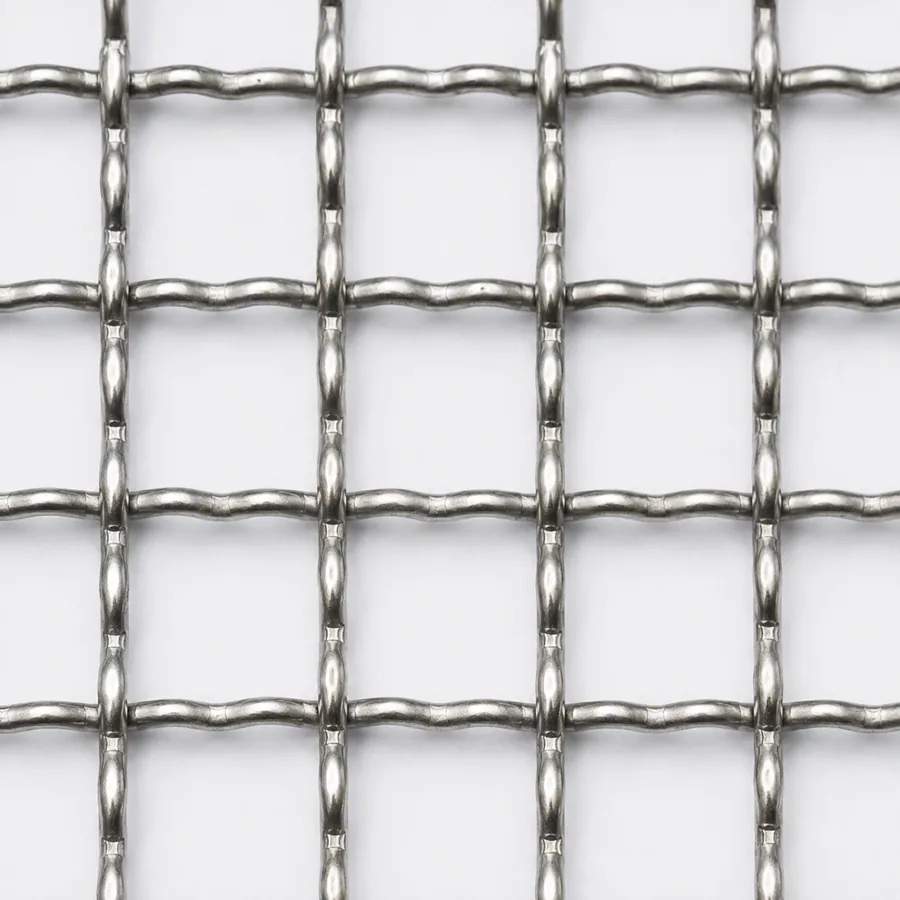
Crimped Wire Mesh
Pre-crimped wires lock together at each intersection to provide rigid, dimensionally stable openings for screening and separation.
Explore Crimped Wire Mesh →Industrial use
Applications
Industrial filtration
Liquid, gas and process filtration elements, support layers and protective screens.
Polymer processing
Screen packs and filter media evaluated for plastic extrusion and melt-filtration requirements.
Chemical processing
Separation and screening where material compatibility, opening control and process conditions matter.
Food & pharmaceutical
Screening and filtration components specified with the project’s material, cleanliness and documentation requirements.
Mining & screening
Woven mesh selected for classification, screening and equipment-protection applications.
Fabrication & OEM
Cut discs, cylinders, baskets and drawing-based mesh components for downstream equipment assembly.
Production workflow
Manufacturing & Quality Control
Wire and material confirmation
Confirm requested grade, wire diameter tolerance and application requirements before production.
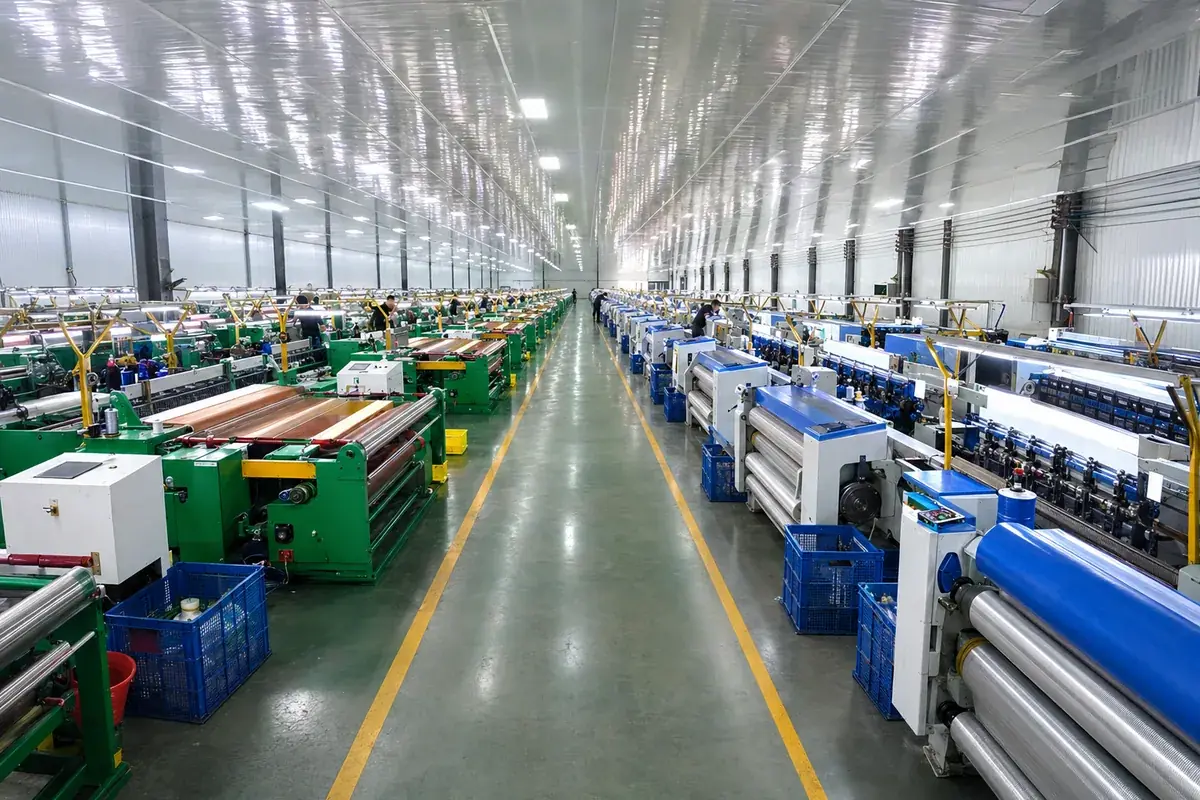
Controlled weaving
Set warp and weft tension for the required mesh count, weave structure and finished width.
Inspection and finishing
Check dimensions and mesh uniformity, then slit, cut, clean or fabricate as specified.
Identification and packing
Label finished goods by specification and prepare packaging for the agreed shipping method.
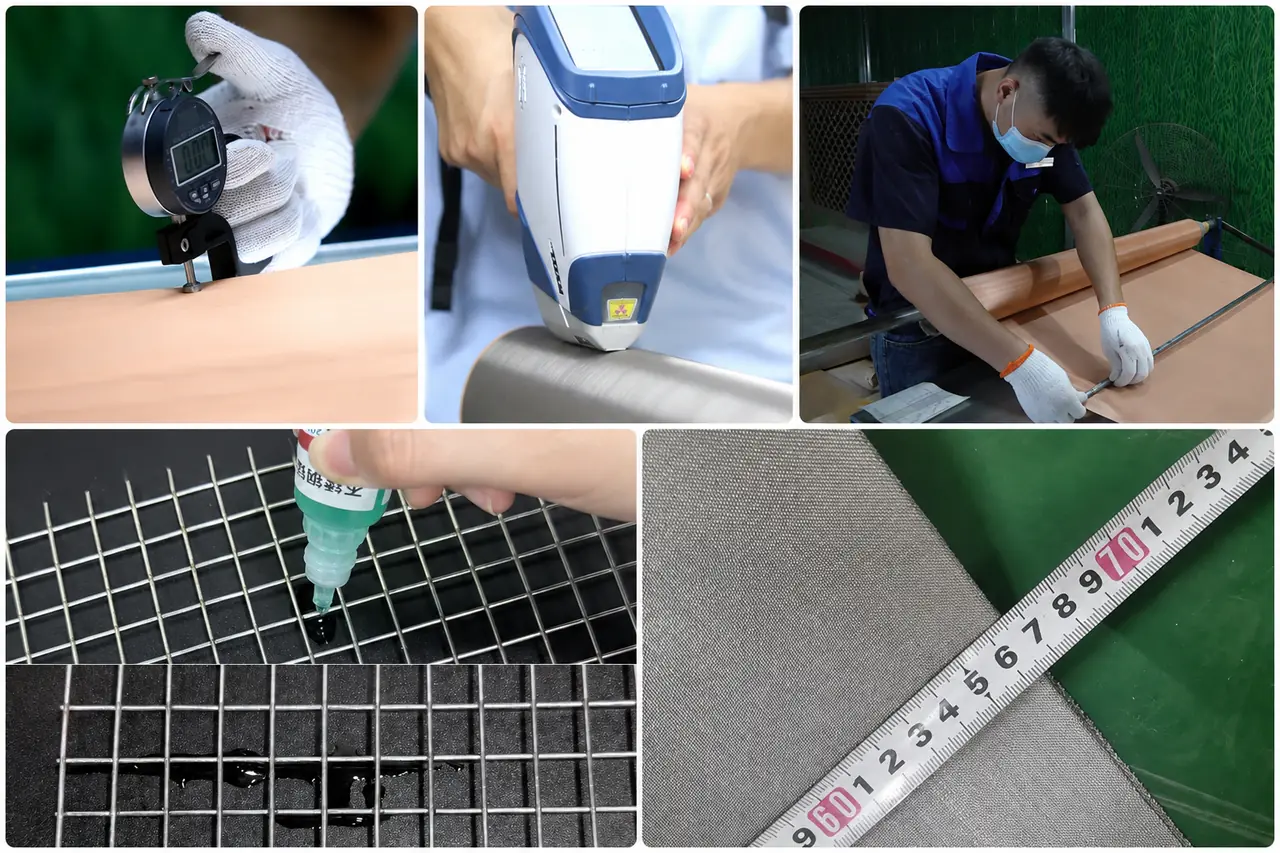
Inspection checkpoints
- Material and specification verification
- Mesh count and aperture inspection
- Wire diameter measurement
- Width and roll-length confirmation
- Surface and weaving-defect review
- Packing and label verification
OEM flexibility
Custom Manufacturing
Woven wire mesh can be supplied to a drawing, process condition or downstream fabrication requirement rather than limited to a catalogue roll size. Feasibility is reviewed from the complete product specification.
- Custom mesh count and wire diameter combinations
- Custom roll width and roll length
- Slit rolls, sheets and cut-to-size pieces
- Discs, tubes, baskets and fabricated filter parts
- Edge treatment and drawing-based production
- Private labeling and export packing requirements
Export preparation
Packing & Export
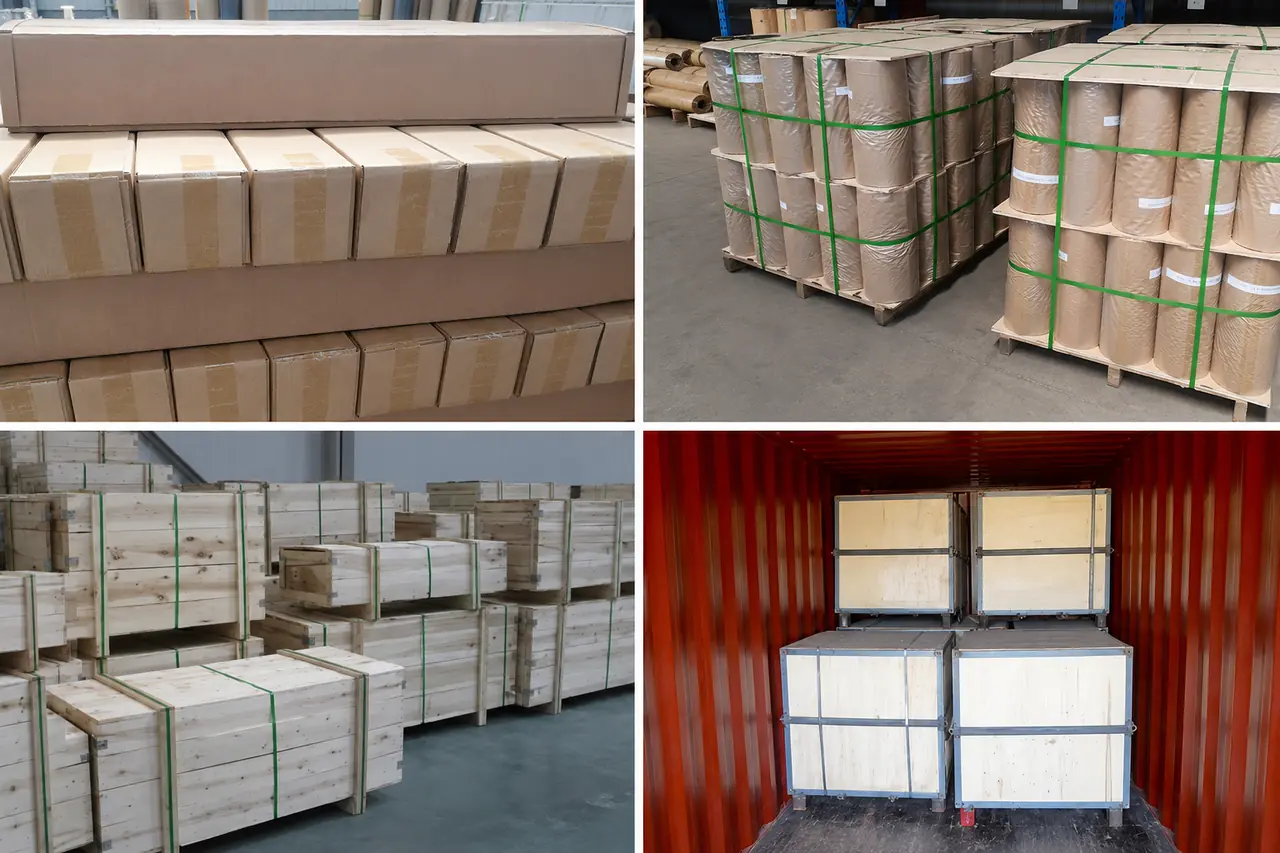
Packing is selected according to mesh fineness, roll dimensions, fabricated form and transport method. Requirements should be confirmed in the purchase specification.
- Moisture-resistant inner wrapping
- Protective paper tubes or cores
- Crates or reinforced export cases
- Specification labels and packing lists
- Custom pallet or handling instructions
Procurement checklist
How to Request an Accurate Quote
- 1
Define the material and weave
Specify SS304, SS304L, SS316, SS316L, SS310S or another required alloy, together with plain, twill, Dutch or another requested weave.
- 2
Define the mesh
Provide mesh count and wire diameter, or the target aperture, micron requirement and application details.
- 3
Define dimensions and finish
Confirm roll width and length, sheet or part size, edge condition and any cutting or fabrication requirement.
- 4
Define commercial requirements
Add quantity, destination, packing, inspection documents, delivery target and any drawing or test notes.
Buyer questions
Stainless Steel Woven Wire Mesh FAQ
What is the difference between plain weave and twill weave stainless steel wire mesh?
In plain weave, each wire alternates over and under the next wire to form a stable, usually square opening. In twill weave, wires pass over and under two adjacent wires, which can support comparatively heavier wire at finer mesh counts. Select the construction against the required opening, strength and process condition.
When should I consider Dutch weave or reverse Dutch weave?
Dutch and reverse Dutch weaves use different warp and weft wire arrangements from square mesh. They are commonly evaluated for fine filtration where particle retention, support and flow characteristics need to be reviewed together. Send the process medium and filtration target for a technical feasibility review.
Is mesh count the same as micron rating?
No. Mesh count is the number of openings per linear inch. Actual opening and filtration behaviour also depend on wire diameter, weave construction and the particles or medium being processed. State the target micron value with the application when requesting a quotation.
How is the opening of square woven wire mesh calculated?
For square mesh specified by openings per inch, the approximate clear opening is calculated as 25.4 mm divided by the mesh count, minus the wire diameter in millimetres. The result is a nominal reference; the finished mesh should be evaluated against the agreed dimensional tolerance.
Is stainless wire cloth the same as stainless steel woven wire mesh?
In many North American industrial specifications, stainless wire cloth is a common term for stainless steel woven wire mesh. The required mesh still needs to be defined by material grade, weave, mesh count or opening, wire diameter and dimensions.
How do I choose a woven wire mesh for filtration?
Start with the process medium, target particle size, allowable pressure drop, flow requirement, temperature and chemical exposure. Square mesh is often used for screening and classification, while Dutch weave constructions are evaluated for finer filtration where the weave structure affects retention and flow.
What is the difference between woven selvage and cut edges?
A woven selvage is a finished loom edge formed during weaving, while a cut edge is produced when mesh is slit or trimmed to width. Edge availability depends on the weave, wire diameter and finished width. State whether the edge will remain exposed or be enclosed in a frame or assembly.
How does wire diameter affect woven mesh opening and strength?
At the same mesh count, a larger wire diameter reduces the clear opening and increases the percentage of metal in the mesh. It can also increase stiffness and mechanical strength. Mesh count and wire diameter therefore need to be specified together.
- Materials
- SS304, SS304L, SS316, SS316L, SS310S
- Weave types
- Plain, twill, Dutch and reverse Dutch
- Square-weave references
- Selected 4 × 4 to 200 × 200 mesh combinations
- Supply form
- Rolls, sheets, cut pieces or custom parts
Made to your specification · Request a quotation
Technical DataProduct parameters & construction details
- Product code
- YC-SS-WOVEN-001
- Materials
- SS304, SS304L, SS316, SS316L, SS310S
- Weave types
- Plain, twill, Dutch and reverse Dutch
- Square-weave references
- Selected 4 × 4 to 200 × 200 mesh combinations
- Dutch / reverse Dutch
- Separate warp × weft counts and wire diameters
- Opening / filtration
- Square aperture or weave-specific tested retention
- Supply form
- Rolls, sheets, cut pieces or custom parts